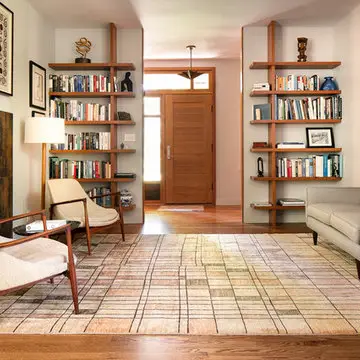
Mid-Century Modern Design × Botanical Garden Center
Style × Space Compatibility
33%
60%
20%
Strengths
- High-durability material palette suited for botanical garden center traffic
- Tactile warmth through wood and leather
Challenges
- Standard implementation considerations apply
Design Philosophy & Approach
Designing a mid-century modern-inspired botanical garden center means reconciling Mid-Century Modern's emphasis on clean lines, organic curves, minimal ornamentation with the operational realities of botanical garden center environments — specifically climate control for plant species, educational display design, greenhouse integration. This pairing shows creative tension that demands careful design mediation (compatibility score: 31/100).
Key advantages include high-durability material palette suited for botanical garden center traffic; tactile warmth through wood and leather. Design challenges to address: standard implementation considerations apply. The space achieves a sustainability score of 4.1/10 with material durability rated at 33% and biophilic potential at 20%.
- Apply large windows to address climate control for plant species in the botanical garden center context
- Apply open floor plans and statement furniture pieces to address educational display design in the botanical garden center context
- Adapt Mid-Century Modern vocabulary with purpose-built solutions for greenhouse integration
- Apply clean lines and minimal ornamentation to address gift shop flow in the botanical garden center context
- Apply open floor plans and statement furniture pieces to address café inclusion in the botanical garden center context
- Apply clean lines and minimal ornamentation to address accessibility in the botanical garden center context
Sustainability Approach
This Mid-Century Modern × botanical garden center combination achieves a sustainability score of 4.1/10 (exceptional), with 50.8% green coverage (dense), 4.6/10 air quality, and 55.9% renewable energy integration. Mid-Century Modern's reliance on renewable materials (wood, fabric) gives this combination a natural sustainability advantage when sourced responsibly. The biophilic potential of 20% suggests incorporating additional biophilic interventions such as interior planting, natural light optimization, and organic textures.
Environmental Performance
| Metric | Botanical Garden Center | Range | Global Avg | Assessment |
|---|---|---|---|---|
| Sustainability Score | 4.9/10 | 0.4–9.6 | 4.8/10 | ↑ Exceptional |
| Green Cover | 4.9/10 | 0.2–10.0 | 5.1/10 | ↓ Dense |
| Air Quality Index | 5.1/10 | 0.0–10.0 | 4.9/10 | ↑ Excellent |
| Renewable Energy Usage | 5.2/10 | 0.1–9.9 | 5.0/10 | ↑ Very High |
Based on 276 urban planning records for this space category.
Sustainability Score Distribution
0.0–0.2
0.2–0.4
0.4–0.6
0.6–0.8
0.8–1.0
Green Cover Distribution
0.0–0.2
0.2–0.4
0.4–0.6
0.6–0.8
0.8–1.0
Socioeconomic Context
| Metric | Botanical Garden Center | Std Dev | Global Avg | Deviation |
|---|---|---|---|---|
| Population Density | 5.4/10 | ±3.0 | 5.0/10 | ↑ 6.5% |
| Average Income | 4.9/10 | ±2.8 | 4.9/10 | ↓ 0.1% |
| Crime Rate | 5.0/10 | ±2.8 | 5.0/10 | ↓ 0.5% |
Population Density Distribution
0.0–0.2
0.2–0.4
0.4–0.6
0.6–0.8
0.8–1.0
Income Distribution
0.0–0.2
0.2–0.4
0.4–0.6
0.6–0.8
0.8–1.0
Material & Color Recommendations
Recommended Materials
Color Palette
Design Implementation Guide
✓Climate control for plant species
Apply large windows to address climate control for plant species
✓educational display design
Apply open floor plans and statement furniture pieces to address educational display design
○greenhouse integration
Adapt Mid-Century Modern vocabulary with purpose-built solutions for greenhouse integration
✓gift shop flow
Apply clean lines and minimal ornamentation to address gift shop flow
✓café inclusion
Apply open floor plans and statement furniture pieces to address café inclusion
✓accessibility
Apply clean lines and minimal ornamentation to address accessibility
○humidity management
Adapt Mid-Century Modern vocabulary with purpose-built solutions for humidity management
Application Notes
Implementing Mid-Century Modern design in a botanical garden center begins with the space's primary requirements: climate control for plant species, educational display design, greenhouse integration. Mid-Century Modern design directly addresses 5 of these through its characteristic elements. For example, apply large windows to address climate control for plant species. Areas requiring adaptation include greenhouse integration and humidity management, where the style's standard vocabulary must be extended with purpose-built solutions. Material selection centers on wood, metal, glass — chosen for their alignment with both mid-century modern aesthetics and botanical garden center durability requirements (material durability: 33%, comfort: 60%).
Style Rankings for Botanical Garden Center Spaces
| # | Style | Score | Durability | Comfort | Biophilic |
|---|---|---|---|---|---|
| 1 | Bohemian | 56/100 | 0% | 60% | 60% |
| 2 | Tropical | 55/100 | 17% | 40% | 60% |
| 3 | Asian | 51/100 | 17% | 20% | 60% |
| 4 | Craftsman | 41/100 | 67% | 40% | 20% |
| 5 | Coastal | 39/100 | 33% | 60% | 20% |
| 6 | Scandinavian | 39/100 | 17% | 80% | 20% |
| 7 | Transitional | 34/100 | 50% | 60% | 20% |
| 8 | Contemporary | 33/100 | 67% | 40% | 20% |
| 9 | Industrial | 33/100 | 67% | 40% | 20% |
| 10 | Mediterranean | 31/100 | 33% | 20% | 20% |
| 11 | Mid-Century Modern current | 31/100 | 33% | 60% | 20% |
| 12 | Traditional | 31/100 | 33% | 60% | 20% |
| 13 | Modern | 30/100 | 50% | 40% | 20% |
| 14 | Victorian | 30/100 | 50% | 40% | 20% |
| 15 | Minimalist | 29/100 | 67% | 20% | 20% |
| 16 | Farmhouse | 27/100 | 33% | 40% | 20% |
| 17 | French Country | 27/100 | 33% | 40% | 20% |
| 18 | Rustic | 27/100 | 17% | 60% | 20% |
| 19 | Southwestern | 27/100 | 33% | 40% | 20% |
| 20 | Shabby Chic | 23/100 | 17% | 40% | 20% |
| 21 | Eclectic | 0/100 | 0% | 0% | 0% |
Mid-Century Modern Across Space Types
| # | Space Type | Category | Score | Durability | Comfort |
|---|---|---|---|---|---|
| 1 | Workshop Studio | Industrial | 55/100 | 33% | 60% |
| 2 | Office | Commercial | 51/100 | 33% | 60% |
| 3 | Public Library | Residential | 51/100 | 33% | 60% |
| 4 | Community Center | Residential | 49/100 | 33% | 60% |
| 5 | Co-working Space | Commercial | 43/100 | 33% | 60% |
| 6 | Restaurant | Commercial | 43/100 | 33% | 60% |
| 7 | Gallery Warehouse | Industrial | 41/100 | 33% | 60% |
| 8 | Public Atrium | Green Space | 39/100 | 33% | 60% |
| 9 | Retail Store | Commercial | 37/100 | 33% | 60% |
| 10 | Café | Commercial | 37/100 | 33% | 60% |
| 11 | Hotel Lobby | Commercial | 37/100 | 33% | 60% |
| 12 | Bank Branch | Commercial | 37/100 | 33% | 60% |
| 13 | Park Pavilion | Green Space | 37/100 | 33% | 60% |
| 14 | Innovation Hub | Industrial | 35/100 | 33% | 60% |
| 15 | Botanical Garden Center current | Green Space | 31/100 | 33% | 60% |