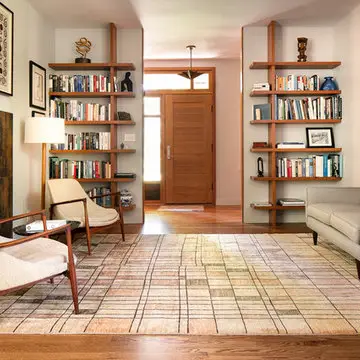
Mid-Century Modern Design
Mid-Century Modern design emerged from the post-war optimism of the 1940s–60s, when designers like Eames, Saarinen, and Noguchi redefined furniture and architecture. It celebrates organic curves, new materials, and the democratic ideal of good design for all.
Design Philosophy
Mid-Century Modern philosophy holds that design should be both beautiful and accessible. Form follows function, but function need not be austere — organic shapes and playful colors humanize the rational.
Compatibility Rankings
Mid-Century Modern design scored across 15 public space types by material durability, comfort, and biophilic potential.
| Rank | Space Type | Score | Category |
|---|---|---|---|
| 1 | Workshop Studio | 55/100 | Industrial |
| 2 | Office | 51/100 | Commercial |
| 3 | Public Library | 51/100 | Residential |
| 4 | Community Center | 49/100 | Residential |
| 5 | Co-working Space | 43/100 | Commercial |
| 6 | Restaurant | 43/100 | Commercial |
| 7 | Gallery Warehouse | 41/100 | Industrial |
| 8 | Public Atrium | 39/100 | Green Space |
| 9 | Retail Store | 37/100 | Commercial |
| 10 | Café | 37/100 | Commercial |
| 11 | Hotel Lobby | 37/100 | Commercial |
| 12 | Bank Branch | 37/100 | Commercial |
| 13 | Park Pavilion | 37/100 | Green Space |
| 14 | Innovation Hub | 35/100 | Industrial |
| 15 | Botanical Garden Center | 31/100 | Green Space |
Sustainability by Land Use Type
| Land Use | Sustainability | Green Cover | Air Quality | Samples |
|---|---|---|---|---|
| Commercial | 4.8/10 | 49.1% | 4.8/10 | 877 |
| Green Space | 4.9/10 | 50.4% | 5.0/10 | 858 |
| Industrial | 4.8/10 | 50.6% | 5.0/10 | 841 |
| Residential | 4.8/10 | 52.0% | 5.0/10 | 900 |
Mid-Century Modern in Public Spaces
Mid-Century Modern × Bank Branch
Bank Branch Application
Mid-Century Modern × Botanical Garden Center
Botanical Garden Center Application
Mid-Century Modern × Café
Café Application
Mid-Century Modern × Co-working Space
Co-working Space Application
Mid-Century Modern × Community Center
Community Center Application
Mid-Century Modern × Gallery Warehouse
Gallery Warehouse Application
Mid-Century Modern × Hotel Lobby
Hotel Lobby Application
Mid-Century Modern × Innovation Hub
Innovation Hub Application
Mid-Century Modern × Office
Office Application
Mid-Century Modern × Park Pavilion
Park Pavilion Application
Mid-Century Modern × Public Atrium
Public Atrium Application
Mid-Century Modern × Public Library
Public Library Application
Mid-Century Modern × Restaurant
Restaurant Application
Mid-Century Modern × Retail Store
Retail Store Application
Mid-Century Modern × Workshop Studio
Workshop Studio Application
Typical Materials
Mid-Century Modern
Mid-Century Modern design emerged from the post-war optimism of the 1940s–60s, when designers like Eames, Saarinen, and Noguchi redefined furniture and architecture. It celebrates organic curves, new materials, and the democratic ideal of good design for all.
Mid-Century Modern Design × Workshop Studio
Style × Space Compatibility 55 /100 Durability 33% Comfort 60% Biophilic 20% Strengths High-durability material palette suited for…
Mid-Century Modern Design × Public Atrium
Style × Space Compatibility 39 /100 Durability 33% Comfort 60% Biophilic 20% Strengths High-durability material palette suited for…
Mid-Century Modern Design × Public Library
Style × Space Compatibility 51 /100 Durability 33% Comfort 60% Biophilic 20% Strengths High-durability material palette suited for…
Mid-Century Modern Design × Restaurant
Style × Space Compatibility 43 /100 Durability 33% Comfort 60% Biophilic 20% Strengths High-durability material palette suited for…
Mid-Century Modern Design × Retail Store
Style × Space Compatibility 37 /100 Durability 33% Comfort 60% Biophilic 20% Strengths High-durability material palette suited for…
Mid-Century Modern Design × Bank Branch
Style × Space Compatibility 37 /100 Durability 33% Comfort 60% Biophilic 20% Strengths High-durability material palette suited for…
Mid-Century Modern Design × Botanical Garden Center
Style × Space Compatibility 31 /100 Durability 33% Comfort 60% Biophilic 20% Strengths High-durability material palette suited for…
Mid-Century Modern Design × Café
Style × Space Compatibility 37 /100 Durability 33% Comfort 60% Biophilic 20% Strengths High-durability material palette suited for…
Mid-Century Modern Design × Co-working Space
Style × Space Compatibility 43 /100 Durability 33% Comfort 60% Biophilic 20% Strengths High-durability material palette suited for…
Mid-Century Modern Design × Community Center
Style × Space Compatibility 49 /100 Durability 33% Comfort 60% Biophilic 20% Strengths High-durability material palette suited for…