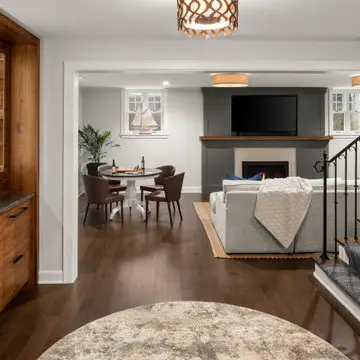
Craftsman Design × Community Center
Style × Space Compatibility
67%
40%
20%
Strengths
- High-durability material palette suited for community center traffic
- Tactile warmth through wood and leather
Challenges
- Standard implementation considerations apply
Design Philosophy & Approach
Designing a craftsman-inspired community center means reconciling Craftsman's emphasis on exposed structural elements, built-in cabinetry, natural wood trim with the operational realities of community center environments — specifically multi-purpose room flexibility, kitchen facilities, storage for equipment. This pairing shows creative tension that demands careful design mediation (compatibility score: 39/100).
Key advantages include high-durability material palette suited for community center traffic; tactile warmth through wood and leather. Design challenges to address: standard implementation considerations apply. The space achieves a sustainability score of 4.9/10 with material durability rated at 67% and biophilic potential at 20%.
- Apply simple hardware to address multi-purpose room flexibility in the community center context
- Adapt Craftsman vocabulary with purpose-built solutions for kitchen facilities
- Apply built-in cabinetry to address storage for equipment in the community center context
- Apply simple hardware to address accessibility compliance in the community center context
- Adapt Craftsman vocabulary with purpose-built solutions for acoustic separation between rooms
- Apply earth-toned color schemes to address childcare areas in the community center context
Sustainability Approach
This Craftsman × community center combination achieves a sustainability score of 4.9/10 (exceptional), with 64.6% green coverage (dense), 4.3/10 air quality, and 58.1% renewable energy integration. Craftsman's industrial material palette (metal, glass) demands attention to recycled content and lifecycle analysis to optimize environmental performance. The biophilic potential of 20% suggests incorporating additional biophilic interventions such as interior planting, natural light optimization, and organic textures.
Environmental Performance
| Metric | Community Center | Range | Global Avg | Assessment |
|---|---|---|---|---|
| Sustainability Score | 4.8/10 | 0.0–9.8 | 4.8/10 | ↓ Exceptional |
| Green Cover | 5.1/10 | 0.0–10.0 | 5.1/10 | ↑ Dense |
| Air Quality Index | 5.1/10 | 0.0–10.0 | 4.9/10 | ↑ Excellent |
| Renewable Energy Usage | 5.0/10 | 0.0–10.0 | 5.0/10 | ↑ Very High |
Based on 444 urban planning records for this space category.
Sustainability Score Distribution
0.0–0.2
0.2–0.4
0.4–0.6
0.6–0.8
0.8–1.0
Green Cover Distribution
0.0–0.2
0.2–0.4
0.4–0.6
0.6–0.8
0.8–1.0
Material & Color Recommendations
Recommended Materials
Color Palette
Design Implementation Guide
✓Multi-purpose room flexibility
Apply simple hardware to address multi-purpose room flexibility
○kitchen facilities
Adapt Craftsman vocabulary with purpose-built solutions for kitchen facilities
✓storage for equipment
Apply built-in cabinetry to address storage for equipment
✓accessibility compliance
Apply simple hardware to address accessibility compliance
○acoustic separation between rooms
Adapt Craftsman vocabulary with purpose-built solutions for acoustic separation between rooms
✓childcare areas
Apply earth-toned color schemes to address childcare areas
✓senior-friendly design
Apply simple hardware to address senior-friendly design
Application Notes
Implementing Craftsman design in a community center begins with the space's primary requirements: multi-purpose room flexibility, kitchen facilities, storage for equipment. Craftsman design directly addresses 5 of these through its characteristic elements. For example, apply simple hardware to address multi-purpose room flexibility. Areas requiring adaptation include kitchen facilities and acoustic separation between rooms, where the style's standard vocabulary must be extended with purpose-built solutions. Material selection centers on wood, stone, tile — chosen for their alignment with both craftsman aesthetics and community center durability requirements (material durability: 67%, comfort: 40%).
Style Rankings for Community Center Spaces
| # | Style | Score | Durability | Comfort | Biophilic |
|---|---|---|---|---|---|
| 1 | Scandinavian | 63/100 | 17% | 80% | 20% |
| 2 | Transitional | 60/100 | 50% | 60% | 20% |
| 3 | Bohemian | 56/100 | 0% | 60% | 60% |
| 4 | Traditional | 51/100 | 33% | 60% | 20% |
| 5 | Mid-Century Modern | 49/100 | 33% | 60% | 20% |
| 6 | Rustic | 47/100 | 17% | 60% | 20% |
| 7 | Contemporary | 45/100 | 67% | 40% | 20% |
| 8 | Victorian | 44/100 | 50% | 40% | 20% |
| 9 | Coastal | 43/100 | 33% | 60% | 20% |
| 10 | Farmhouse | 41/100 | 33% | 40% | 20% |
| 11 | French Country | 41/100 | 33% | 40% | 20% |
| 12 | Tropical | 41/100 | 17% | 40% | 60% |
| 13 | Craftsman current | 39/100 | 67% | 40% | 20% |
| 14 | Industrial | 39/100 | 67% | 40% | 20% |
| 15 | Asian | 37/100 | 17% | 20% | 60% |
| 16 | Shabby Chic | 37/100 | 17% | 40% | 20% |
| 17 | Modern | 36/100 | 50% | 40% | 20% |
| 18 | Minimalist | 35/100 | 67% | 20% | 20% |
| 19 | Southwestern | 33/100 | 33% | 40% | 20% |
| 20 | Mediterranean | 23/100 | 33% | 20% | 20% |
| 21 | Eclectic | 0/100 | 0% | 0% | 0% |
Craftsman Across Space Types
| # | Space Type | Category | Score | Durability | Comfort |
|---|---|---|---|---|---|
| 1 | Workshop Studio | Industrial | 53/100 | 67% | 40% |
| 2 | Restaurant | Commercial | 51/100 | 67% | 40% |
| 3 | Gallery Warehouse | Industrial | 47/100 | 67% | 40% |
| 4 | Innovation Hub | Industrial | 47/100 | 67% | 40% |
| 5 | Office | Commercial | 45/100 | 67% | 40% |
| 6 | Co-working Space | Commercial | 45/100 | 67% | 40% |
| 7 | Retail Store | Commercial | 45/100 | 67% | 40% |
| 8 | Café | Commercial | 45/100 | 67% | 40% |
| 9 | Hotel Lobby | Commercial | 45/100 | 67% | 40% |
| 10 | Bank Branch | Commercial | 45/100 | 67% | 40% |
| 11 | Botanical Garden Center | Green Space | 41/100 | 67% | 40% |
| 12 | Public Atrium | Green Space | 41/100 | 67% | 40% |
| 13 | Park Pavilion | Green Space | 39/100 | 67% | 40% |
| 14 | Community Center current | Residential | 39/100 | 67% | 40% |
| 15 | Public Library | Residential | 39/100 | 67% | 40% |